Serotonin syndrome nursing care
Serotonin syndrome is a medical emergency caused by too much serotonin, often when an SSRI is combined with another serotonergic drug. Recognize the triad of agitation and confusion, autonomic signs (fever, sweating, tachycardia), and neuromuscular signs (tremor, hyperreflexia). The nursing priority is to stop the drug, notify, and support the patient.
What serotonin syndrome is, and why the NCLEX tests it
SSRIs and other serotonergic drugs raise serotonin to treat depression and anxiety, but too much serotonin, especially when drugs are combined, causes a dangerous syndrome. The exam tests whether you recognize it and act.
Key nursing considerations for serotonin syndrome
Mental status change (agitation, confusion), autonomic instability (fever, sweating, tachycardia), and neuromuscular signs (tremor, hyperreflexia).
Combining an SSRI with another serotonergic drug such as a triptan, tramadol, an MAOI, or St. John's wort.
The priority is to stop the serotonergic drug and notify the provider.
Anticipate cooling, IV fluids, and monitoring; benzodiazepines may be used.
Review the medication list for serotonergic combinations before starting a new one.
How the NCLEX turns serotonin syndrome into a question
Report the triad of fever, agitation or confusion, sweating, tremor, and a racing heart together.
Priority stop the serotonergic drug, notify the provider, and support the patient with cooling and monitoring.
Teach report high fever, agitation, sweating, and tremor together, and tell every provider all the medicines and supplements you take.
An SSRI patient who also started a triptan or tramadol now febrile, tremulous, and agitated. Recognize serotonin syndrome, stop the drug, and notify.
Quick answers
What causes serotonin syndrome?
Too much serotonin, most often when an SSRI is combined with another serotonergic drug such as a triptan, tramadol, an MAOI, or St. John's wort.
What are the signs of serotonin syndrome?
A triad of altered mental status (agitation, confusion), autonomic instability (fever, sweating, tachycardia), and neuromuscular signs (tremor, hyperreflexia).
What is the nursing priority for serotonin syndrome?
Stop the serotonergic drug, notify the provider, and provide supportive care such as cooling, fluids, and monitoring.
Keep studying
These pages build on each other. Work through the related classes, then pressure-test yourself against the free cheat sheet and the full guide.
Lithium
0.6 to 1.2 level, hydration, and toxicity signs.
Read the guide →Lithium level targets
0.6 to 1.2 therapeutic, 1.5 and up toxic.
Read the guide →Phenytoin
10 to 20 level, gum overgrowth, never stop abruptly.
Read the guide →Naloxone
Opioid reversal: support breathing, watch for re-sedation.
Read the guide →All high-yield drug classes
The seven most-tested classes on one page, each decoded the same way.
Open the overview →Antidotes & lab values cheat sheet
The must-know antidotes, drug levels, and lab cutoffs, free and printable.
Open the cheat sheet →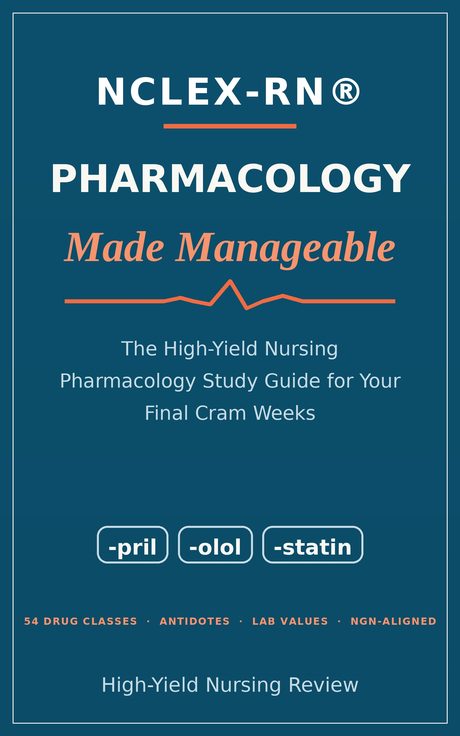
Every high-yield class, decoded the same way
You just read the serotonin syndrome breakdown. The full guide runs all 54 high-yield drug classes on one repeatable system, then closes with the cram tables: antidotes, therapeutic drug levels, must-know lab values, the suffix sheet, and a final-week checklist.
98-page PDF + EPUB · instant download · 7-day money-back guarantee · free sample
Get the high-yield cheat sheet by email
Drop your email and we will send you the free High-Yield NCLEX Pharmacology Cheat Sheet as a printable PDF right away: antidotes, high-alert drugs, and the lab-value cutoffs the exam leans on. We email rarely, and you can unsubscribe in one click. Founding reviewers welcome: after you join, just reply to the welcome email and we will send you the full guide free to review honestly.