Naloxone nursing considerations
Naloxone's nursing considerations are that it reverses opioid effects, so give it for opioid-induced respiratory depression, support breathing first, and then monitor for re-sedation because naloxone is shorter-acting than most opioids and repeat doses are often needed. Expect it to precipitate pain or withdrawal.
What naloxone does, and why the NCLEX tests it
Naloxone (Narcan) is the opioid reversal agent. It displaces opioids at the receptor to reverse sedation and respiratory depression. The exam's key point is that it is short-acting, so the opioid can outlast it.
Key nursing considerations for naloxone
Use for opioid-induced respiratory depression (respiratory rate under 12 with heavy sedation); support the airway first.
Naloxone is shorter-acting than most opioids, so sedation and slow breathing can return; give repeat doses as needed.
Reversal can precipitate pain, agitation, nausea, and withdrawal symptoms.
Watch respiratory rate, oxygen saturation, and level of consciousness closely after giving it.
Keep naloxone available for patients on high-dose or IV opioids.
How the NCLEX turns naloxone into a question
Report return of slow or shallow breathing and heavy sedation after an initial response.
Priority support breathing and give naloxone, then keep monitoring for re-sedation and repeat as needed.
Lab respiratory rate, oxygen saturation, and level of consciousness.
Teach for take-home naloxone, teach the family how to give it and to call emergency services, since the effect can wear off before the opioid does.
A patient reversed with naloxone who becomes drowsy again with a falling respiratory rate 30 minutes later. Recognize re-sedation and give another dose.
Quick answers
What does naloxone reverse?
Opioid effects, especially the respiratory depression and sedation of an opioid overdose. It displaces opioids at the receptor.
Why monitor for re-sedation after naloxone?
Naloxone is shorter-acting than most opioids, so the opioid can outlast it and the sedation and slow breathing can return, requiring repeat doses.
What happens when naloxone is given to an opioid-dependent patient?
It can precipitate sudden pain, agitation, nausea, and opioid withdrawal, so the patient is monitored closely.
Keep studying
These pages build on each other. Work through the related classes, then pressure-test yourself against the free cheat sheet and the full guide.
Lithium
0.6 to 1.2 level, hydration, and toxicity signs.
Read the guide →Lithium level targets
0.6 to 1.2 therapeutic, 1.5 and up toxic.
Read the guide →Phenytoin
10 to 20 level, gum overgrowth, never stop abruptly.
Read the guide →Serotonin syndrome
The SSRI emergency: recognize the triad, stop the drug.
Read the guide →All high-yield drug classes
The seven most-tested classes on one page, each decoded the same way.
Open the overview →Antidotes & lab values cheat sheet
The must-know antidotes, drug levels, and lab cutoffs, free and printable.
Open the cheat sheet →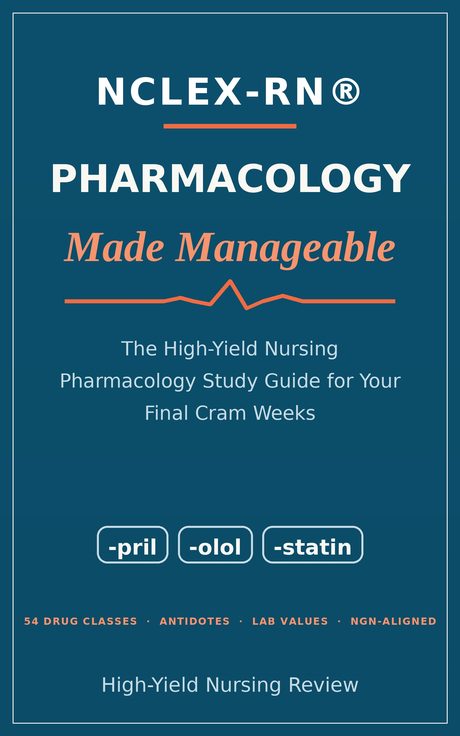
Every high-yield class, decoded the same way
You just read the naloxone breakdown. The full guide runs all 54 high-yield drug classes on one repeatable system, then closes with the cram tables: antidotes, therapeutic drug levels, must-know lab values, the suffix sheet, and a final-week checklist.
98-page PDF + EPUB · instant download · 7-day money-back guarantee · free sample
Get the high-yield cheat sheet by email
Drop your email and we will send you the free High-Yield NCLEX Pharmacology Cheat Sheet as a printable PDF right away: antidotes, high-alert drugs, and the lab-value cutoffs the exam leans on. We email rarely, and you can unsubscribe in one click. Founding reviewers welcome: after you join, just reply to the welcome email and we will send you the full guide free to review honestly.