Phenytoin nursing considerations
Phenytoin's nursing considerations are its narrow level (10 to 20 mcg/mL), gum overgrowth (gingival hyperplasia) that needs meticulous oral care, and the never-stop-abruptly rule to avoid seizures. Give IV phenytoin slowly with saline only, and watch for nystagmus, ataxia, and slurred speech as toxicity.
What phenytoin does, and why the NCLEX tests it
Phenytoin (Dilantin) stabilizes overactive neurons to prevent seizures. It has a narrow therapeutic level and several classic teaching points, so the exam tests the level, the gum overgrowth, and safe administration.
Key nursing considerations for phenytoin
Therapeutic phenytoin is 10 to 20 mcg/mL. Nystagmus, ataxia, and slurred speech signal toxicity.
Gum overgrowth is common; teach meticulous oral care and regular dental visits.
Stopping suddenly can trigger status epilepticus.
Give IV slowly with saline only; it precipitates in dextrose.
Rash (report, risk of Stevens-Johnson), hirsutism, and reduced effectiveness of oral contraceptives.
How the NCLEX turns phenytoin into a question
Report a rash, and signs of toxicity such as nystagmus, ataxia, or slurred speech.
Priority never stop abruptly, give IV phenytoin slowly with saline, and monitor the drug level.
Lab phenytoin level 10 to 20 mcg/mL.
Teach take it at the same time every day, never stop suddenly, brush and floss carefully and see your dentist, and report any rash.
A phenytoin level of 25 with nystagmus and ataxia. Recognize toxicity, hold, and notify.
Quick answers
What is the therapeutic level for phenytoin?
10 to 20 mcg/mL. Signs of toxicity include nystagmus, ataxia, and slurred speech.
Why does phenytoin need good oral care?
It commonly causes gingival hyperplasia (gum overgrowth), so meticulous brushing, flossing, and regular dental visits are taught.
Can phenytoin be stopped suddenly?
No. Stopping an antiseizure drug abruptly can trigger status epilepticus. It must be tapered under provider guidance.
Keep studying
These pages build on each other. Work through the related classes, then pressure-test yourself against the free cheat sheet and the full guide.
Lithium
0.6 to 1.2 level, hydration, and toxicity signs.
Read the guide →Lithium level targets
0.6 to 1.2 therapeutic, 1.5 and up toxic.
Read the guide →Serotonin syndrome
The SSRI emergency: recognize the triad, stop the drug.
Read the guide →Naloxone
Opioid reversal: support breathing, watch for re-sedation.
Read the guide →All high-yield drug classes
The seven most-tested classes on one page, each decoded the same way.
Open the overview →Antidotes & lab values cheat sheet
The must-know antidotes, drug levels, and lab cutoffs, free and printable.
Open the cheat sheet →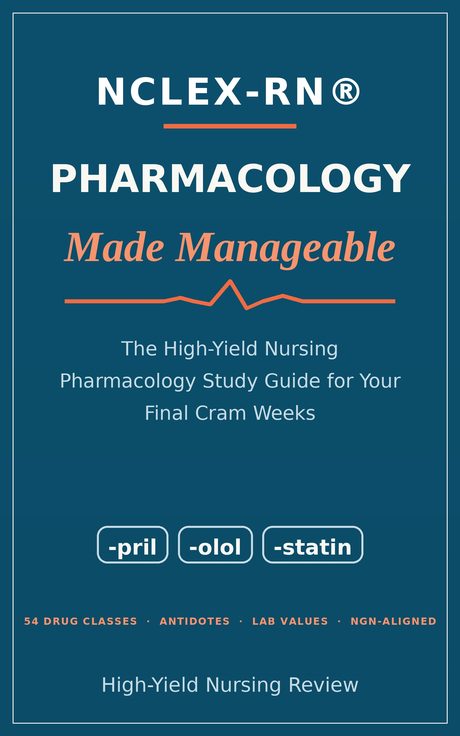
Every high-yield class, decoded the same way
You just read the phenytoin breakdown. The full guide runs all 54 high-yield drug classes on one repeatable system, then closes with the cram tables: antidotes, therapeutic drug levels, must-know lab values, the suffix sheet, and a final-week checklist.
98-page PDF + EPUB · instant download · 7-day money-back guarantee · free sample
Get the high-yield cheat sheet by email
Drop your email and we will send you the free High-Yield NCLEX Pharmacology Cheat Sheet as a printable PDF right away: antidotes, high-alert drugs, and the lab-value cutoffs the exam leans on. We email rarely, and you can unsubscribe in one click. Founding reviewers welcome: after you join, just reply to the welcome email and we will send you the full guide free to review honestly.