Spironolactone nursing considerations
Spironolactone is a potassium-sparing diuretic, so the danger is the opposite of furosemide: hyperkalemia. Monitor the potassium level, teach the patient to avoid potassium-rich foods and salt substitutes, and report muscle weakness or an irregular heartbeat. It can also cause gynecomastia.
What spironolactone does, and why the NCLEX tests it
Spironolactone blocks aldosterone, so the body excretes sodium and water but keeps potassium. It is used in heart failure, resistant hypertension, and fluid overload. Because it spares potassium, the exam tests hyperkalemia, the reverse of the loop and thiazide picture.
Key nursing considerations for spironolactone
Monitor potassium and report muscle weakness, an irregular pulse, or numbness.
Teach the patient to avoid potassium-rich foods in excess and potassium-based salt substitutes and supplements.
Spironolactone can cause breast tenderness or enlargement; report it.
It is often paired with a loop diuretic to balance potassium; still check the level.
Weigh daily and monitor blood pressure and fluid status.
How the NCLEX turns spironolactone into a question
Report muscle weakness, an irregular heartbeat, or numbness (hyperkalemia), and breast tenderness or enlargement.
Priority monitor potassium; hold and notify for hyperkalemia, and reinforce avoiding potassium supplements and salt substitutes.
Lab potassium (watch for hyperkalemia), sodium, and kidney function.
Teach avoid salt substitutes and large amounts of potassium-rich foods, report muscle weakness or an irregular heartbeat, and report breast changes.
A potassium of 5.9 in a patient on spironolactone. Recognize hyperkalemia, hold, and notify.
Quick answers
Does spironolactone raise or lower potassium?
It raises potassium. As a potassium-sparing diuretic, its main danger is hyperkalemia, so avoid salt substitutes and extra potassium.
What foods should be avoided on spironolactone?
Large amounts of potassium-rich foods (bananas, oranges, potatoes) and potassium-based salt substitutes, because the drug already retains potassium.
Why does spironolactone cause breast changes?
It has anti-androgen effects that can cause gynecomastia and menstrual changes. Report these to the provider.
Keep studying
These pages build on each other. Work through the related classes, then pressure-test yourself against the free cheat sheet and the full guide.
Digoxin
Apical pulse, the 0.8 to 2 level, the potassium trap, and DigiFab.
Read the guide →Metoprolol
Hold for HR under 60, never stop abruptly, masks hypoglycemia.
Read the guide →Carvedilol
Beta-blocker holds plus give-with-food and start-low heart-failure care.
Read the guide →Lisinopril
The dry cough, the angioedema emergency, and high potassium.
Read the guide →All high-yield drug classes
The seven most-tested classes on one page, each decoded the same way.
Open the overview →Antidotes & lab values cheat sheet
The must-know antidotes, drug levels, and lab cutoffs, free and printable.
Open the cheat sheet →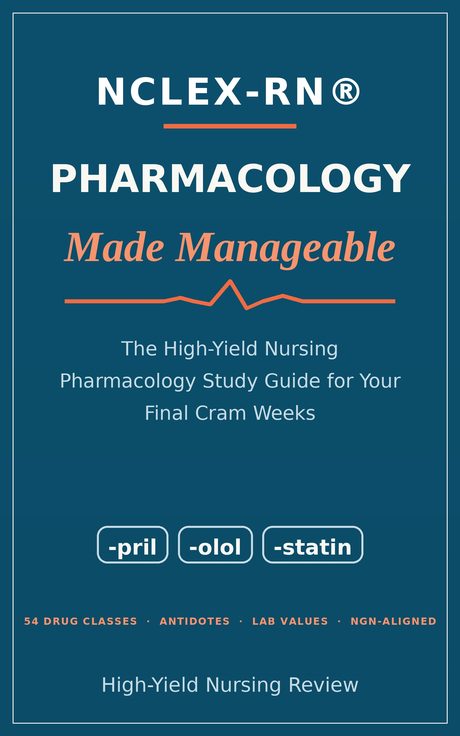
Every high-yield class, decoded the same way
You just read the spironolactone breakdown. The full guide runs all 54 high-yield drug classes on one repeatable system, then closes with the cram tables: antidotes, therapeutic drug levels, must-know lab values, the suffix sheet, and a final-week checklist.
98-page PDF + EPUB · instant download · 7-day money-back guarantee · free sample
Get the high-yield cheat sheet by email
Drop your email and we will send you the free High-Yield NCLEX Pharmacology Cheat Sheet as a printable PDF right away: antidotes, high-alert drugs, and the lab-value cutoffs the exam leans on. We email rarely, and you can unsubscribe in one click. Founding reviewers welcome: after you join, just reply to the welcome email and we will send you the full guide free to review honestly.