Digoxin nursing considerations
The nursing considerations for digoxin center on one habit: take an apical pulse for a full 60 seconds before every dose, and hold the dose and notify the provider if it is under 60 in an adult. Also check the most recent potassium and digoxin level, because a low potassium (under 3.5) can trigger toxicity even when the level looks normal. The therapeutic range is 0.8 to 2 ng/mL.
What digoxin does, and why the NCLEX tests it
Digoxin makes the heart beat stronger but slower. It raises the force of contraction and lowers the heart rate while slowing conduction through the AV node, which is why it is used in heart failure and to control the rate in atrial fibrillation. Because it has a narrow safety margin, the exam keeps asking you to catch toxicity before you give a dose.
Key nursing considerations for digoxin
Count the apical pulse for one full minute before each dose. Hold and notify the provider if it is under 60 beats per minute in an adult.
Therapeutic digoxin is 0.8 to 2 ng/mL. Above 2 ng/mL is toxic, and that number is the one the exam loves.
Low potassium (under 3.5) worsens digoxin toxicity even when the level reads normal. Loop and thiazide diuretics lower potassium, so the two are a classic combined-toxicity setup.
Early toxicity is anorexia, nausea, vomiting, and visual changes such as blurred vision or yellow-green halos around lights, plus fatigue, confusion, and bradycardia.
For serious toxicity, anticipate digoxin immune Fab (DigiFab).
How the NCLEX turns digoxin into a question
Report yellow or green visual halos, anorexia, nausea, and vomiting as signs of toxicity.
Priority take the apical pulse for a full minute; hold and notify if it is under 60 in an adult, and check the latest potassium and digoxin level.
Lab digoxin level 0.8 to 2 ng/mL and potassium 3.5 to 5.0. Low potassium is the trap.
Teach count your pulse for one full minute before each dose, report seeing yellow or blurry halos, and never double up on a missed dose.
A chart showing an apical pulse of 52, a potassium of 3.1, or a patient who mentions seeing yellow. Recognize digoxin toxicity, hold the dose, notify, and anticipate DigiFab.
Quick answers
What is the priority nursing action before giving digoxin?
Take the apical pulse for one full minute. If it is under 60 beats per minute in an adult, hold the dose and notify the provider, and check the most recent potassium and digoxin level.
What is the therapeutic range for digoxin?
0.8 to 2 ng/mL. A level above 2 ng/mL is toxic. Low potassium can cause toxicity even when the level is within range.
What is the antidote for digoxin toxicity?
Digoxin immune Fab (DigiFab).
Keep studying
These pages build on each other. Work through the related classes, then pressure-test yourself against the free cheat sheet and the full guide.
Metoprolol
Hold for HR under 60, never stop abruptly, masks hypoglycemia.
Read the guide →Carvedilol
Beta-blocker holds plus give-with-food and start-low heart-failure care.
Read the guide →Lisinopril
The dry cough, the angioedema emergency, and high potassium.
Read the guide →Calcium channel blockers
-dipine edema vs verapamil and diltiazem bradycardia, and grapefruit.
Read the guide →All high-yield drug classes
The seven most-tested classes on one page, each decoded the same way.
Open the overview →Antidotes & lab values cheat sheet
The must-know antidotes, drug levels, and lab cutoffs, free and printable.
Open the cheat sheet →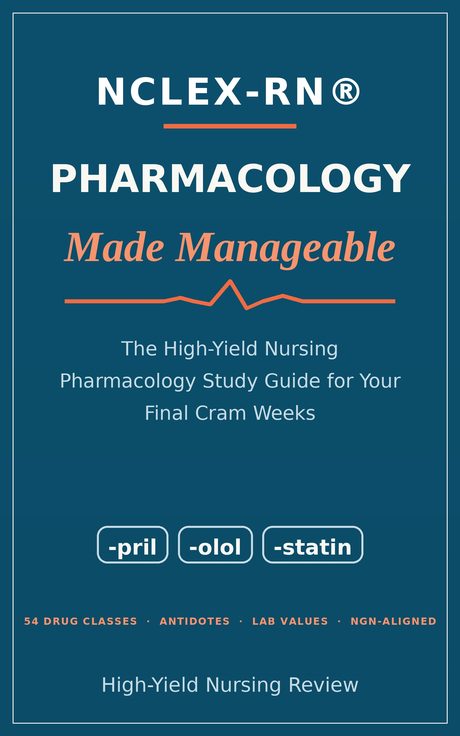
Every high-yield class, decoded the same way
You just read the digoxin breakdown. The full guide runs all 54 high-yield drug classes on one repeatable system, then closes with the cram tables: antidotes, therapeutic drug levels, must-know lab values, the suffix sheet, and a final-week checklist.
98-page PDF + EPUB · instant download · 7-day money-back guarantee · free sample
Get the high-yield cheat sheet by email
Drop your email and we will send you the free High-Yield NCLEX Pharmacology Cheat Sheet as a printable PDF right away: antidotes, high-alert drugs, and the lab-value cutoffs the exam leans on. We email rarely, and you can unsubscribe in one click. Founding reviewers welcome: after you join, just reply to the welcome email and we will send you the full guide free to review honestly.