Prednisone nursing considerations
Prednisone's nursing considerations follow the Cushing's picture: it raises blood sugar, retains fluid, lowers potassium, and masks infection, so monitor glucose, weight, blood pressure, and signs of infection. The most tested rule is never stop it abruptly, because that can cause an adrenal crisis. Take it with food in the morning.
What prednisone does, and why the NCLEX tests it
Prednisone is a corticosteroid, a powerful anti-inflammatory and immunosuppressant used for asthma and COPD flares, autoimmune disease, allergic reactions, and adrenal insufficiency. Its side effects mirror Cushing's syndrome, and the exam's key point is that long-term steroids must be tapered.
Key nursing considerations for prednisone
Tapering prevents adrenal crisis (weakness, low blood pressure, low glucose) because the adrenal glands stop making cortisol.
Monitor blood sugar, especially in diabetics.
Steroids suppress immunity and blunt fever, so assess carefully and teach infection precautions.
Watch for fluid retention, weight gain, high blood pressure, and low potassium.
Reduces GI upset and matches the body's natural cortisol rhythm; stress dosing may be needed for illness or surgery.
How the NCLEX turns prednisone into a question
Report signs of infection, high blood sugar, black or tarry stools, and after abrupt stopping, weakness and low blood pressure (adrenal crisis).
Priority taper rather than stop abruptly; monitor glucose, potassium, blood pressure, and weight, and assess for infection.
Lab blood glucose, potassium, blood pressure, weight, and WBC.
Teach take it with food in the morning, never stop it suddenly, avoid people who are sick and report infection, monitor your blood sugar, and wear a medical-alert bracelet.
A patient who abruptly stopped long-term prednisone now weak and hypotensive. Recognize adrenal crisis and act.
Quick answers
Why can't prednisone be stopped abruptly?
Long-term steroids suppress the body's own cortisol production, so stopping suddenly can cause a life-threatening adrenal crisis. The dose must be tapered.
Does prednisone raise blood sugar?
Yes. Corticosteroids cause hyperglycemia, so blood glucose is monitored, especially in people with diabetes.
Why does prednisone increase infection risk?
It suppresses the immune system and can mask fever, so infections are easy to miss. Teach infection precautions and report any signs promptly.
Keep studying
These pages build on each other. Work through the related classes, then pressure-test yourself against the free cheat sheet and the full guide.
Insulin
Peaks, the Rule of 15, clear before cloudy.
Read the guide →Metformin
Hold around contrast dye; lactic acidosis; take with food.
Read the guide →Levothyroxine
Empty-stomach morning dosing, lifelong, watch for too much.
Read the guide →All high-yield drug classes
The seven most-tested classes on one page, each decoded the same way.
Open the overview →Antidotes & lab values cheat sheet
The must-know antidotes, drug levels, and lab cutoffs, free and printable.
Open the cheat sheet →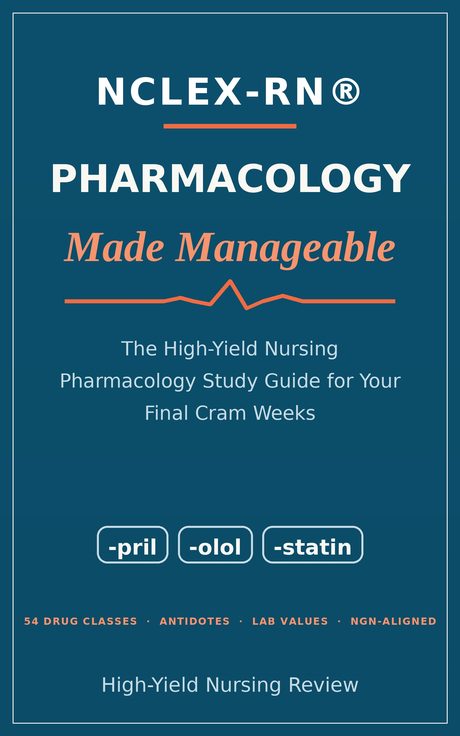
Every high-yield class, decoded the same way
You just read the prednisone breakdown. The full guide runs all 54 high-yield drug classes on one repeatable system, then closes with the cram tables: antidotes, therapeutic drug levels, must-know lab values, the suffix sheet, and a final-week checklist.
98-page PDF + EPUB · instant download · 7-day money-back guarantee · free sample
Get the high-yield cheat sheet by email
Drop your email and we will send you the free High-Yield NCLEX Pharmacology Cheat Sheet as a printable PDF right away: antidotes, high-alert drugs, and the lab-value cutoffs the exam leans on. We email rarely, and you can unsubscribe in one click. Founding reviewers welcome: after you join, just reply to the welcome email and we will send you the full guide free to review honestly.