Metformin nursing considerations
Metformin's signature nursing consideration is to hold it before and for about 48 hours after IV iodinated contrast dye, because the combination raises the risk of lactic acidosis and kidney injury. It does not cause hypoglycemia on its own; give it with food, and watch for the rare but serious lactic acidosis.
What metformin does, and why the NCLEX tests it
Metformin is the first-line drug for type 2 diabetes. It lowers glucose production by the liver and improves insulin sensitivity, and because it does not push insulin, it does not cause hypoglycemia by itself. The exam's favorite point is holding it around contrast dye.
Key nursing considerations for metformin
Hold metformin before and for about 48 hours after IV iodinated contrast, and assess kidney function before restarting.
Rare but serious; report muscle pain, weakness, unusual tiredness, or trouble breathing.
Reduces the common GI upset (nausea, diarrhea).
Metformin does not cause lows on its own, though it can with other diabetes drugs.
Long-term use can lower vitamin B12.
How the NCLEX turns metformin into a question
Report signs of lactic acidosis such as muscle pain, weakness, or trouble breathing.
Priority hold metformin around iodinated contrast dye and assess kidney function.
Lab blood glucose, kidney function (metformin), and HbA1c.
Teach take it with food, stop it around any scan that uses dye as instructed, and never skip meals.
A patient on metformin scheduled for a CT with contrast. Recognize that the metformin must be held around the procedure.
Quick answers
Why is metformin held before contrast dye?
Metformin plus IV iodinated contrast raises the risk of lactic acidosis and kidney injury, so it is held before and for about 48 hours after, with kidney function checked before restarting.
Does metformin cause hypoglycemia?
Not on its own. Metformin does not stimulate insulin release, so it does not cause lows by itself, though it can when combined with other diabetes medicines.
Why take metformin with food?
To reduce the common GI side effects of nausea and diarrhea.
Keep studying
These pages build on each other. Work through the related classes, then pressure-test yourself against the free cheat sheet and the full guide.
Insulin
Peaks, the Rule of 15, clear before cloudy.
Read the guide →Levothyroxine
Empty-stomach morning dosing, lifelong, watch for too much.
Read the guide →Prednisone
Never stop abruptly, high sugar, masks infection.
Read the guide →All high-yield drug classes
The seven most-tested classes on one page, each decoded the same way.
Open the overview →Antidotes & lab values cheat sheet
The must-know antidotes, drug levels, and lab cutoffs, free and printable.
Open the cheat sheet →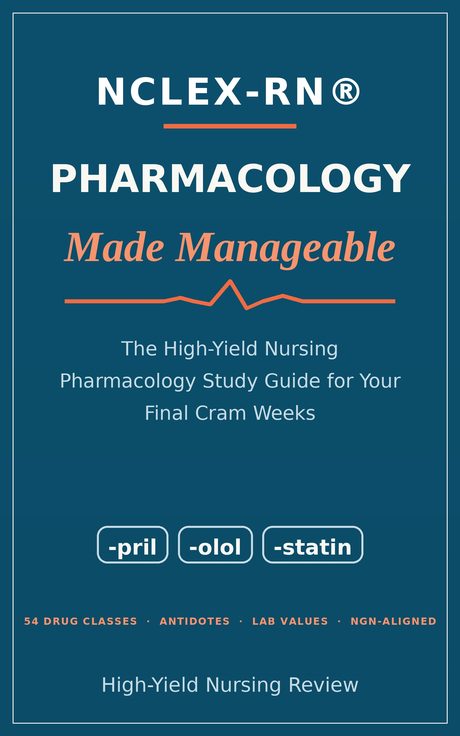
Every high-yield class, decoded the same way
You just read the metformin breakdown. The full guide runs all 54 high-yield drug classes on one repeatable system, then closes with the cram tables: antidotes, therapeutic drug levels, must-know lab values, the suffix sheet, and a final-week checklist.
98-page PDF + EPUB · instant download · 7-day money-back guarantee · free sample
Get the high-yield cheat sheet by email
Drop your email and we will send you the free High-Yield NCLEX Pharmacology Cheat Sheet as a printable PDF right away: antidotes, high-alert drugs, and the lab-value cutoffs the exam leans on. We email rarely, and you can unsubscribe in one click. Founding reviewers welcome: after you join, just reply to the welcome email and we will send you the full guide free to review honestly.