Gentamicin nursing considerations
Gentamicin is an aminoglycoside, so its two nursing considerations are the two toxicities: nephrotoxicity and ototoxicity. Monitor BUN, creatinine, and urine output, report ringing in the ears, hearing changes, or dizziness, and draw peak and trough levels to keep the dose safe.
What gentamicin does, and why the NCLEX tests it
Gentamicin is an aminoglycoside antibiotic reserved for serious gram-negative infections. Its high-yield problem is the pair of toxicities the exam repeats: the ears and the kidneys.
Key nursing considerations for gentamicin
Irreversible hearing loss and balance problems; report ringing in the ears, hearing changes, or dizziness right away.
Monitor BUN, creatinine, and urine output.
Draw peak and trough levels; a high trough signals accumulation and toxicity.
Keep the patient well hydrated to protect the kidneys.
Assess allergies, obtain cultures before the first dose, and finish the full course.
How the NCLEX turns gentamicin into a question
Report ringing in the ears, hearing loss, or dizziness (ototoxic) and decreased urine output (nephrotoxic).
Priority draw peak and trough levels and monitor kidney function and hearing.
Lab BUN and creatinine, and peak and trough drug levels (trough under about 2 mcg/mL).
Teach report any ringing in the ears, hearing changes, or dizziness, and stay well hydrated.
A rising creatinine or new tinnitus during gentamicin therapy. Recognize nephrotoxicity or ototoxicity and notify.
Quick answers
What are the two main toxicities of gentamicin?
Nephrotoxicity (kidney injury) and ototoxicity (hearing loss and balance problems). Monitor kidney function, report ear symptoms, and check drug levels.
Why draw peak and trough levels?
To keep gentamicin in a safe window. A trough that is too high signals the drug is accumulating and the risk of toxicity is rising.
What ear symptoms should be reported on gentamicin?
Ringing in the ears, any hearing change, or dizziness, because the hearing damage can be permanent.
Keep studying
These pages build on each other. Work through the related classes, then pressure-test yourself against the free cheat sheet and the full guide.
Vancomycin
Infuse slowly (red man), monitor trough, kidneys and ears.
Read the guide →Cephalosporins
Penicillin cross-allergy and the alcohol reaction.
Read the guide →All high-yield drug classes
The seven most-tested classes on one page, each decoded the same way.
Open the overview →Antidotes & lab values cheat sheet
The must-know antidotes, drug levels, and lab cutoffs, free and printable.
Open the cheat sheet →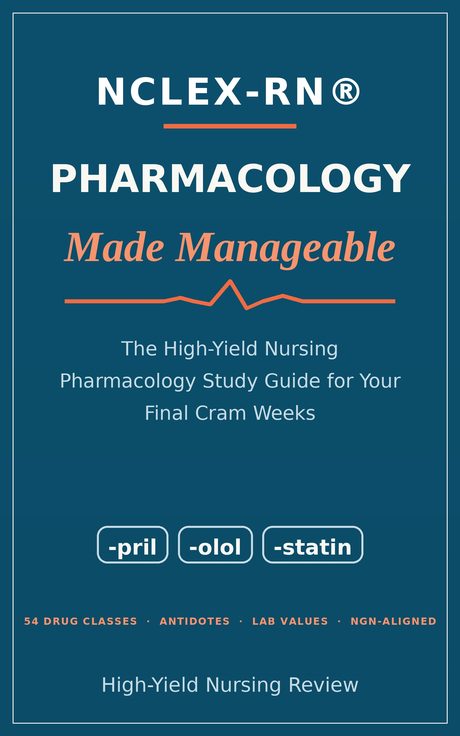
Every high-yield class, decoded the same way
You just read the gentamicin breakdown. The full guide runs all 54 high-yield drug classes on one repeatable system, then closes with the cram tables: antidotes, therapeutic drug levels, must-know lab values, the suffix sheet, and a final-week checklist.
98-page PDF + EPUB · instant download · 7-day money-back guarantee · free sample
Get the high-yield cheat sheet by email
Drop your email and we will send you the free High-Yield NCLEX Pharmacology Cheat Sheet as a printable PDF right away: antidotes, high-alert drugs, and the lab-value cutoffs the exam leans on. We email rarely, and you can unsubscribe in one click. Founding reviewers welcome: after you join, just reply to the welcome email and we will send you the full guide free to review honestly.