Cephalosporins nursing considerations
Cephalosporins' nursing considerations are to ask about a penicillin allergy before giving them (cross-allergy), and to teach strict alcohol avoidance during and for a few days after therapy because certain cephalosporins cause a disulfiram-like reaction (flushing, nausea, vomiting) with alcohol. Finish the full course.
What cephalosporins do, and why the NCLEX tests them
Cephalosporins (prefix cef- or ceph-) inhibit bacterial cell-wall synthesis, like penicillins, and are grouped by generations. The exam tests the penicillin cross-allergy and the alcohol reaction.
Key nursing considerations for cephalosporins
There is cross-sensitivity with penicillins, so screen the allergy history before the first dose.
Certain cephalosporins cause a disulfiram-like reaction (flushing, nausea, vomiting) with alcohol; avoid alcohol during and for several days after.
Report rash, itching, swelling, or trouble breathing.
Diarrhea can occur; some affect bleeding, so watch for bruising.
Obtain cultures before the first dose and finish the full course.
How the NCLEX turns cephalosporins into a question
Report an allergic reaction (rash, swelling, trouble breathing) and alcohol-reaction symptoms.
Priority assess for a penicillin allergy before giving and teach alcohol avoidance.
Lab allergy history and kidney function.
Teach avoid all alcohol while taking this and for a few days after, finish the whole course, and tell your provider about any penicillin allergy.
A patient on a cephalosporin who drinks alcohol and becomes flushed and nauseated. Recognize the disulfiram-like reaction.
Quick answers
Can you drink alcohol on cephalosporins?
No. Certain cephalosporins cause a disulfiram-like reaction with alcohol (flushing, nausea, vomiting), so avoid alcohol during and for several days after therapy.
Why ask about penicillin allergy before a cephalosporin?
Cephalosporins share a structure with penicillins, so there is a risk of cross-allergy. Screen the allergy history before the first dose.
What should be done before the first cephalosporin dose?
Assess allergies and obtain ordered cultures, then give the dose and monitor for an allergic reaction.
Keep studying
These pages build on each other. Work through the related classes, then pressure-test yourself against the free cheat sheet and the full guide.
Vancomycin
Infuse slowly (red man), monitor trough, kidneys and ears.
Read the guide →Gentamicin
Ototoxic and nephrotoxic: ears, kidneys, peaks and troughs.
Read the guide →All high-yield drug classes
The seven most-tested classes on one page, each decoded the same way.
Open the overview →Antidotes & lab values cheat sheet
The must-know antidotes, drug levels, and lab cutoffs, free and printable.
Open the cheat sheet →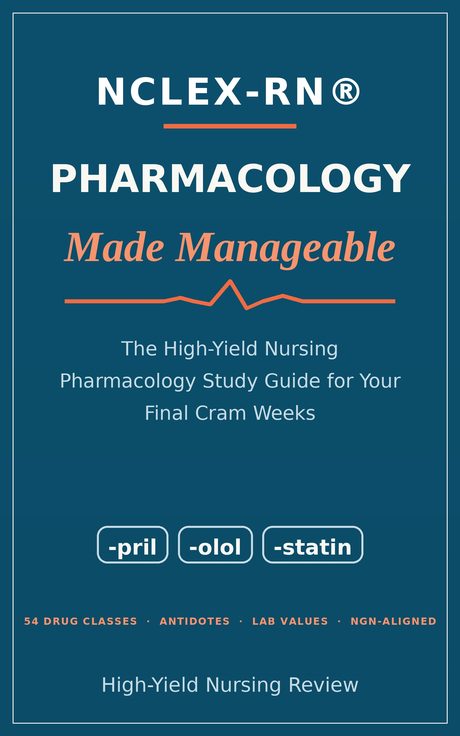
Every high-yield class, decoded the same way
You just read the cephalosporins breakdown. The full guide runs all 54 high-yield drug classes on one repeatable system, then closes with the cram tables: antidotes, therapeutic drug levels, must-know lab values, the suffix sheet, and a final-week checklist.
98-page PDF + EPUB · instant download · 7-day money-back guarantee · free sample
Get the high-yield cheat sheet by email
Drop your email and we will send you the free High-Yield NCLEX Pharmacology Cheat Sheet as a printable PDF right away: antidotes, high-alert drugs, and the lab-value cutoffs the exam leans on. We email rarely, and you can unsubscribe in one click. Founding reviewers welcome: after you join, just reply to the welcome email and we will send you the full guide free to review honestly.