Heparin nursing considerations
Heparin's nursing considerations are to monitor the aPTT (therapeutic is about 1.5 to 2.5 times the control, roughly 46 to 70 seconds) and the platelet count, watch for bleeding, and know the antidote is protamine sulfate. A falling platelet count signals heparin-induced thrombocytopenia (HIT).
What heparin does, and why the NCLEX tests it
Unfractionated heparin activates antithrombin, which inactivates thrombin and factor Xa, so it prevents new clots and stops existing ones from growing. It works fast, so it bridges therapy while slower warfarin takes effect. The exam pairs it with its lab (aPTT) and its antidote (protamine).
Key nursing considerations for heparin
Therapeutic aPTT is about 1.5 to 2.5 times control, roughly 46 to 70 seconds. Above range means bleeding risk.
A drop in platelets can mean heparin-induced thrombocytopenia (HIT), which paradoxically causes clots; stop the heparin and notify.
For overdose or bleeding, anticipate protamine sulfate.
Watch for any bleeding, bruising, or blood in the urine or stool.
Give subcutaneous doses in the abdomen, do not aspirate, and do not rub the site.
How the NCLEX turns heparin into a question
Report any bleeding and a falling platelet count (HIT).
Priority monitor the aPTT and platelet count; for bleeding, anticipate protamine sulfate; give subcutaneous doses correctly.
Lab aPTT (46 to 70 seconds), platelet count, and hemoglobin and hematocrit.
Teach watch for unusual bleeding or bruising, and for subcutaneous injections do not rub the site.
A platelet count dropping from 250,000 to 90,000 several days into heparin. Suspect HIT, stop the heparin, and notify.
Quick answers
Which lab monitors heparin?
The aPTT. The therapeutic range is about 1.5 to 2.5 times the control, roughly 46 to 70 seconds. Warfarin, by contrast, is monitored with the INR.
What is the antidote for heparin?
Protamine sulfate. Note that vitamin K reverses warfarin, not heparin.
What is HIT?
Heparin-induced thrombocytopenia, a drop in platelets that paradoxically causes clots. Monitor the platelet count and stop the heparin if it falls.
Keep studying
These pages build on each other. Work through the related classes, then pressure-test yourself against the free cheat sheet and the full guide.
Enoxaparin
LMWH injection technique: keep the bubble, do not rub.
Read the guide →Warfarin
INR 2 to 3, vitamin K antidote, consistent greens.
Read the guide →Clopidogrel
Antiplatelet bleeding precautions and pre-surgery holds.
Read the guide →Warfarin INR targets
2 to 3 (2.5 to 3.5 valve), and what high or low means.
Read the guide →All high-yield drug classes
The seven most-tested classes on one page, each decoded the same way.
Open the overview →Antidotes & lab values cheat sheet
The must-know antidotes, drug levels, and lab cutoffs, free and printable.
Open the cheat sheet →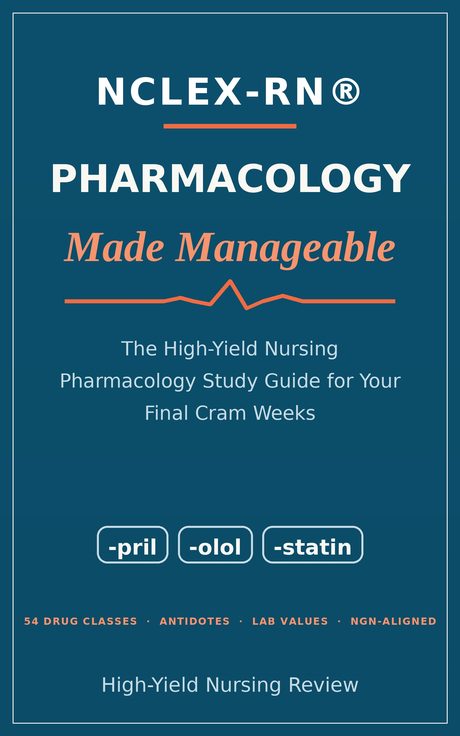
Every high-yield class, decoded the same way
You just read the heparin breakdown. The full guide runs all 54 high-yield drug classes on one repeatable system, then closes with the cram tables: antidotes, therapeutic drug levels, must-know lab values, the suffix sheet, and a final-week checklist.
98-page PDF + EPUB · instant download · 7-day money-back guarantee · free sample
Get the high-yield cheat sheet by email
Drop your email and we will send you the free High-Yield NCLEX Pharmacology Cheat Sheet as a printable PDF right away: antidotes, high-alert drugs, and the lab-value cutoffs the exam leans on. We email rarely, and you can unsubscribe in one click. Founding reviewers welcome: after you join, just reply to the welcome email and we will send you the full guide free to review honestly.